Situation: a write-off
How to scrap an insurance write-off
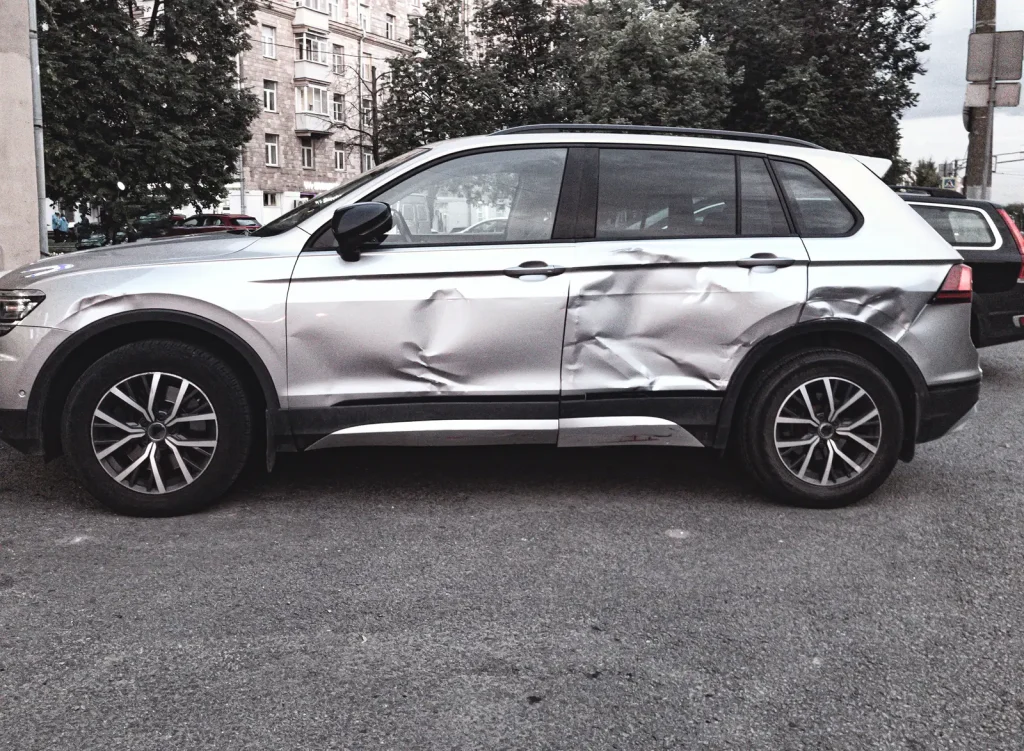
When an insurer decides a car is not worth repairing, it gives the car a category. The category decides whether the car may ever return to the road, and it changes who handles the scrapping.
The decision
Who owns the car now?
If you accepted the insurer’s settlement, the car usually belongs to the insurer, which normally arranges for it to be scrapped or sold on. You send it the V5C, keep the yellow section, and tell the DVLA the car has been written off.
Some owners buy a repairable write-off back. If that is you, the car is yours to repair, sell or scrap, and scrapping works exactly as it does for any other car.
Have these to hand
- The insurer's settlement letter and claim number
- The category it gave the car
- Whether you or the insurer holds the V5C
- A list of anything removed from the car
The four categories
What A, B, S and N mean for scrapping
- 1.
Category A
Cannot be repaired. The whole car has to be crushed, including the parts.
- 2.
Category B
Cannot be repaired. Parts can be salvaged, but the body shell must be crushed.
- 3.
Category S
Structural damage that can be repaired. The category is recorded on the logbook.
- 4.
Category N
Non-structural damage that can be repaired. The owner can keep the logbook.
The method
The four steps still apply
Whatever state the car is in, scrapping it follows the same route.
- 1
Find out what it is worth
Enter the registration and the postcode where the car is parked. That is enough for a licensed buyer who covers the area to look the car up and come back with an offer.
Why it mattersKnowing the value first stops you guessing. An honest description of faults and missing parts means the figure you hear is the figure you are paid. - 2
Get the car ready
Take out everything personal, deal with any private number plate, and find the V5C logbook if you have it. Nothing needs to be repaired, cleaned or drained.
Why it mattersA private plate has to be taken off the record before the car is scrapped. Once the car is destroyed, the right to the number goes with it. - 3
Hand it over
A recovery driver collects the car from wherever it stands, at a time you agree, and you are paid by bank transfer. The car then goes to an Authorised Treatment Facility.
Why it mattersPaying cash for a scrap car is illegal in England, Wales and Scotland. A traceable payment protects you as well as the buyer. - 4
Close the record
Tell the DVLA the car has been scrapped, keep the Certificate of Destruction the facility issues, and expect a refund for any full months of tax.
Why it mattersUntil the DVLA knows, the car is still linked to you. The Certificate of Destruction is your proof if a fine or tax letter ever arrives.
Questions
An insurance write-off: questions
Short, straight answers. The guides go into more depth.
I bought my Category N car back. Can I still scrap it?
Yes. It is your car, so you can have it valued and collected like any other. Mention the category, because it affects what the car is worth.
The insurer has the logbook. Do I need it back?
Not if the insurer is dealing with the car. If you have bought the car back and need a logbook, a replacement is applied for with form V62.
Do I need the V5C logbook to scrap a car?
It helps, but it is not essential. Without one, you tell the DVLA by letter instead of online, giving the registration, make, model, the date of scrapping and the facility's name and address.
Who tells the DVLA that the car has been scrapped?
You should. Use the DVLA's online service with the 11-digit reference from your logbook, or send the yellow section by post. Without that step the car stays linked to you, and the DVLA can fine you up to £1,000.
Situations
Other situations
Each page explains what is different about scrapping a car in that state, and what stays the same.
A failed MOTWhen the repair list is longer than the car is worth.Read more Accident damageCollision, flood or fire damage, collected as it stands.Read more Engine or gearbox failureA single expensive fault that ends the car's useful life.Read more A car that won't runFlat, seized, forgotten or left on a drive for years.Read more A salvage carWhen the parts are worth more than the whole.Read more An old or unwanted carNothing wrong but age, and the running costs keep coming.Read more
Ready when you are
Start with the registration and postcode. A licensed buyer covering your area comes back with an offer, and collection is free.